


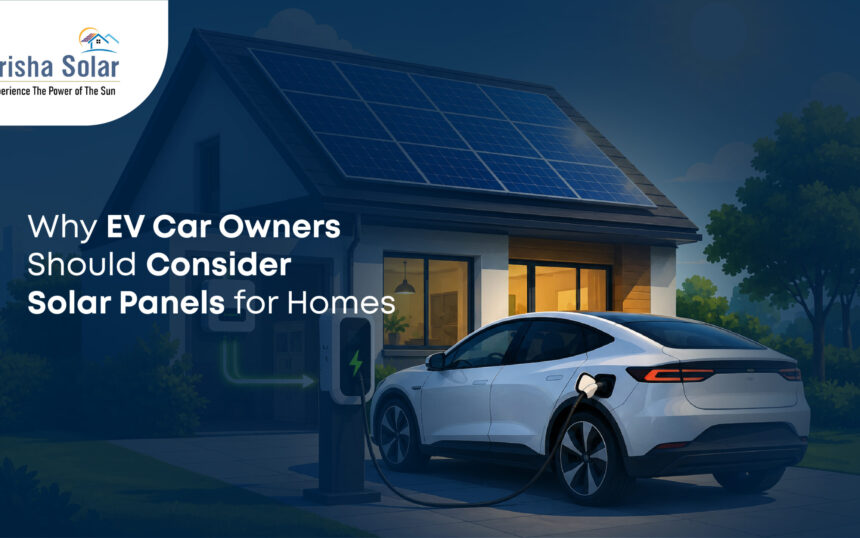
Electric vehicles are becoming increasingly popular across India. Lower running costs, reduced fuel dependency, and government support are encouraging more homeowners to switch from petrol and diesel vehicles to EVs.
However, one important factor many new EV owners notice quickly is the increase in home electricity consumption. Regular EV charging can significantly impact monthly electricity bills, especially for households already using air conditioners and other high-consumption appliances.
This is one of the biggest reasons why EV owners are now investing in solar panels for homes. A properly designed rooftop solar system can help offset EV charging costs while also reducing overall household electricity expenses.
For homeowners planning long-term savings, combining EV adoption with a solar system for home is becoming a practical financial strategy.
Does charging an EV increase electricity bills?
Yes, EV charging can noticeably increase monthly electricity consumption.
The actual increase depends on:
- Vehicle battery size
- Daily travel distance
- Charging frequency
- Charging habits
For example:
- A standard EV may consume approximately 8–15 units of electricity for a full charge depending on battery capacity.
If an EV is charged frequently throughout the month, household electricity usage can rise substantially.
This additional consumption often pushes homes into higher tariff slabs, increasing the overall electricity bill further.
Can solar panels for homes help reduce EV charging costs?
Yes, rooftop solar can significantly offset EV charging expenses.
A properly sized solar system for home generates electricity during the day, which can be used for:
- Household appliances
- Air conditioners
- EV charging requirements
This reduces dependence on grid electricity and lowers monthly power bills.
For many homeowners, this creates a dual-saving advantage:
- Lower household electricity expense
- Lower EV running cost
How much solar capacity is needed for EV charging?
The required solar capacity depends on:
- Household electricity usage
- EV battery size
- Daily driving distance
General residential estimates:
- 3 kW system → suitable for medium household usage with moderate EV charging
- 5 kW system → suitable for larger homes with regular EV charging
- 7 kW+ systems → useful for high-consumption households or multiple EVs
A professional energy assessment helps determine the ideal system size.
How much electricity can residential solar panels generate?
Average daily electricity generation:
- 1 kW system → 4–5 units daily
- 3 kW system → 12–15 units daily
- 5 kW system → 20–25 units daily
In cities like Ahmedabad, strong sunlight conditions improve annual generation efficiency significantly.
This makes residential solar panels highly effective for supporting both household energy usage and EV charging needs.
Is solar-powered EV charging cheaper than petrol and diesel?
In many cases, yes.
Traditional fuel expenses continue fluctuating due to fuel prices, while rooftop solar offers long-term energy stability.
For example:
- Petrol and diesel costs remain recurring expenses
- Solar-powered electricity generation continues for 20–25 years after installation
Once the rooftop solar system reaches payback:
- EV charging cost effectively becomes extremely low compared to fuel-based transportation
This is one of the strongest financial advantages of combining EVs with rooftop solar.
What is the payback period for a solar system for home?
The average payback period for solar panels for homes in India is generally:
- 4 to 6 years depending on usage and system size
After that:
- Electricity generation becomes essentially free
- Savings continue for many more years
- EV charging becomes much more economical
Since solar systems generally last over 25 years, long-term financial returns become substantial.
Do government subsidies help reduce installation cost?
Yes, government support has made rooftop solar far more affordable.
Under the PM Surya Ghar: Muft Bijli Yojana, homeowners may receive:
- Up to ₹30,000 subsidy for 1 kW
- Up to ₹60,000 subsidy for 2 kW
- Up to ₹78,000 subsidy for systems 3 kW and above
This reduces the effective installation cost and improves return on investment.
Are EMI solar panels available for EV owners?
Yes, financing options have made solar adoption easier.
Many providers now offer:
- Monthly EMI plans
- Solar loans
- Flexible financing tenure
This allows homeowners to install EMI solar panels without large upfront investment.
In many cases:
- Monthly EMI becomes comparable to the savings achieved in electricity and fuel expenses combined.
Can net metering increase EV-related savings?
Yes, net metering improves financial efficiency further.
With net metering:
- Excess electricity generated is exported to the grid
- Homeowners receive energy credits
- These credits offset future electricity usage
This helps maximize savings from both household consumption and EV charging.
Why are EV owners increasingly investing in residential solar panels?
EV owners are typically high electricity consumers compared to regular households.
Installing residential solar panels helps:
- Reduce long-term charging costs
- Stabilize electricity expenses
- Lower dependence on fuel and grid electricity
- Improve long-term financial savings
As EV adoption grows in India, rooftop solar is becoming a natural extension of energy-efficient living.
Why is choosing the right installer important?
System sizing and installation quality directly affect long-term performance.
A professional installer helps with:
- Proper solar capacity planning
- EV charging load assessment
- Subsidy documentation
- Net metering approvals
Many homeowners prefer working with the best solar company in Ahmedabad to ensure the system performs efficiently for both household usage and EV charging needs.
The growing popularity of EVs is increasing electricity demand in Indian households, making rooftop solar more valuable than ever. Installing solar panels for homes allows EV owners to reduce charging expenses, lower electricity bills, and improve long-term financial savings.
For homeowners planning both clean transportation and energy efficiency, combining an EV with a solar system for home is becoming one of the smartest long-term investments available today.