


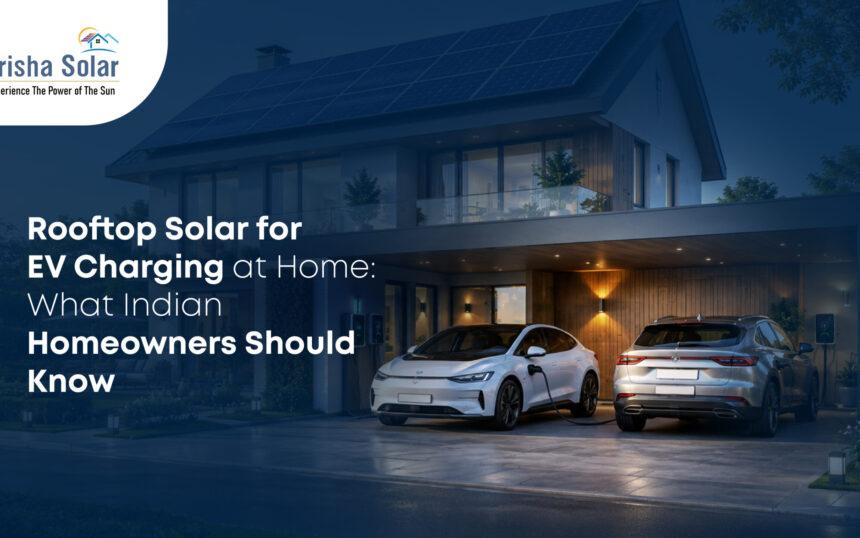
Electric vehicles are becoming more common in Indian homes. They reduce fuel dependency and offer lower running costs compared to petrol or diesel vehicles. But once homeowners start charging an EV at home, they often notice one important change: electricity consumption increases.
This is where rooftop solar becomes relevant.
A well-planned solar setup can help offset a part of the electricity used for EV charging while also supporting regular household needs. For homeowners planning to buy an EV or already using one, combining rooftop solar with home charging can be a smart long-term energy decision.
However, solar for EV charging should be planned carefully. It depends on driving habits, charging schedule, electricity consumption, roof suitability, net metering, and whether backup storage is needed.
Can Rooftop Solar Charge an Electric Car at Home?
Yes, rooftop solar can support EV charging at home.
Solar panels generate electricity during daylight hours. This electricity can be used for household appliances and EV charging, depending on system design and usage patterns.
In most homes, the EV charger is connected to the home’s electrical system. Solar-generated power reduces the amount of electricity drawn from the grid during the day. If the car is charged when solar generation is available, homeowners may use a greater share of their own solar electricity.
If the EV is charged mostly at night, the home may still depend on grid electricity unless battery storage is included.
Does EV Charging Increase Home Electricity Bills?
Yes. EV charging adds a new electricity load to the home.
The increase depends on:
- EV battery size
- Daily driving distance
- Charging frequency
- Charger type
- Charging time
- Existing household consumption
A homeowner who drives short distances may not see a major increase. But regular long-distance use or frequent charging can noticeably raise electricity consumption.
This is why homeowners should evaluate EV charging needs before planning rooftop solar.
Why Should EV Owners Consider Solar Early?
Many homeowners install rooftop solar based only on their current electricity bill. Later, when they buy an EV, the system may no longer match their increased energy needs.
Planning solar and EV charging together helps avoid this issue.
Homeowners should consider:
- Current household electricity usage
- Expected EV charging frequency
- Whether charging will happen during the day or night
- Future plans for a second EV
- Available rooftop space
- Net metering rules
A future-ready plan can help homeowners avoid system modifications later.
Daytime Charging vs Night Charging: Why Does It Matter?
Charging time plays an important role in solar planning.
| Charging Pattern | Solar Benefit |
| Daytime charging | Higher direct use of solar power |
| Evening charging | More dependence on grid electricity |
| Night charging | Battery storage or grid power may be needed |
| Weekend charging | May work well if the car stays home during the day |
| Mixed charging | Requires usage-based planning |
For many working professionals, the EV may not be at home during peak sunlight hours. In that case, rooftop solar still reduces household electricity bills, but direct EV charging from solar may be limited.
Net metering can help balance this by allowing excess solar generation to be exported to the grid and adjusted as per applicable policy.
How Does Net Metering Help EV Owners?
Net metering allows excess solar electricity to be exported to the grid and adjusted against electricity consumption, subject to local rules.
For EV owners, this can be useful because the home may generate more solar power during the day and use more electricity later for charging.
MNRE’s grid-connected rooftop solar programme supports residential consumers applying through the National Portal or DISCOM process, with subsidy transferred after installation by empanelled vendors and verification by the state DISCOM.
Net metering and billing rules vary by state and distribution company, so homeowners should confirm the current process before planning solar for EV charging.
Do You Need a Battery for Solar EV Charging?
Not always.
If the home has stable grid supply and net metering is available, a battery may not be necessary for every homeowner. A grid-connected solar system can reduce electricity bills while the grid supports power needs when solar generation is not available.
A battery may make sense if:
- You charge the EV mostly at night
- You want backup power during outages
- Grid supply is unreliable
- You want to store excess solar energy
- You want greater energy independence
Batteries add cost and require proper planning, so they should be chosen based on actual need rather than assumed as mandatory.
Can Solar Reduce EV Running Costs?
Solar can help reduce the effective cost of EV charging by lowering grid electricity use.
The actual benefit depends on:
- How much solar power your home generates
- When the EV is charged
- How much electricity the EV consumes
- Net metering availability
- Household consumption pattern
EVs already reduce dependence on petrol or diesel. When combined with rooftop solar, homeowners can improve long-term energy savings even further.
This is one reason solar and EV ownership are becoming connected lifestyle decisions.
What Should Homeowners Check Before Installing Solar for EV Charging?
Before planning a solar setup around EV charging, homeowners should ask:
| Question | Why It Matters |
| How often will the EV be charged at home? | Helps estimate added electricity demand |
| Will charging happen during the day or night? | Affects direct solar usage |
| Is net metering available? | Helps manage excess generation |
| Is the roof suitable for solar? | Determines installation feasibility |
| Is the electrical system ready for EV charging? | Ensures safety and compatibility |
| Will a second EV be added later? | Helps plan future energy needs |
These questions help homeowners avoid underplanning.
Why Is Professional Assessment Important?
Solar for EV charging should not be planned with generic assumptions.
A professional assessment should evaluate:
- Electricity bill history
- Roof space and sunlight exposure
- EV charging requirements
- Household usage pattern
- Net metering process
- Future expansion needs
- Battery requirement, if any
A reliable solar company in Ahmedabad can help homeowners understand whether their rooftop solar plan should account for EV charging now or remain ready for future upgrades.
The goal is to design a practical solution that supports both current household use and future mobility needs.
What Mistakes Should EV Owners Avoid?
Homeowners should avoid these common mistakes:
- Installing solar without considering future EV charging
- Assuming all EV charging will happen directly from solar
- Ignoring nighttime charging needs
- Skipping electrical safety checks
- Not understanding net metering
- Adding a battery without evaluating actual need
- Choosing a provider without after-sales support
Careful planning can improve performance, savings, and long-term convenience.
Conclusion
Rooftop solar can be a valuable addition for Indian homeowners who own or plan to buy an electric vehicle. It helps reduce dependence on grid electricity, supports long-term savings, and makes home energy planning more future-ready.
The best approach is to evaluate EV charging habits, rooftop suitability, net metering rules, and future electricity needs before installation. Solar may not fully replace grid power for every charging pattern, but it can meaningfully reduce overall electricity costs when planned correctly.
For EV owners, rooftop solar is not just about reducing today’s bill. It is about preparing the home for a cleaner, more efficient energy future.