


Rooftop solar helps homeowners reduce electricity bills by generating power from sunlight. But one question often comes up during solar planning: should you add a battery with your rooftop solar system?
The answer depends on your goal.
Some homeowners install solar mainly to reduce electricity bills. Others want backup power during outages. Some are planning for electric vehicles, larger homes, or future energy independence. Solar batteries can be useful in certain cases, but they are not necessary for every home.
Before investing in battery storage, homeowners should understand how solar batteries work, when they make sense, and when a grid-connected solar system without batteries may be enough.
What Does a Solar Battery Do?
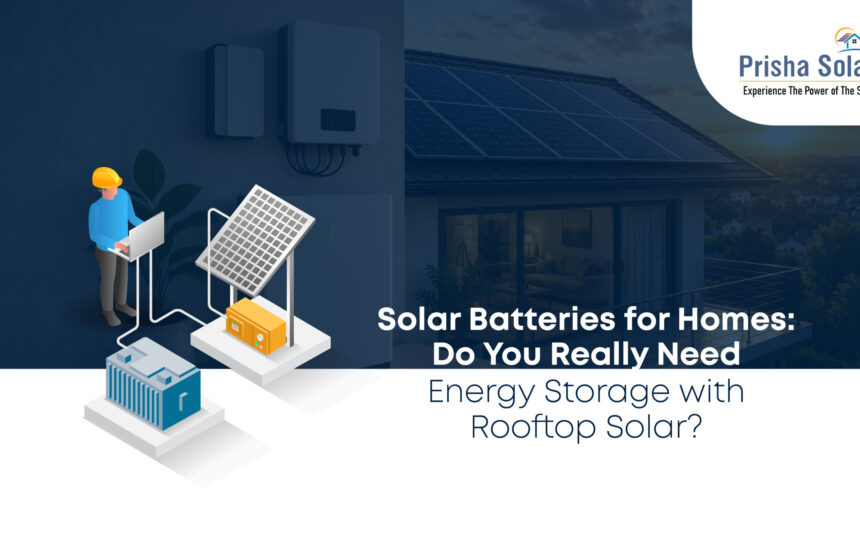
A solar battery stores excess electricity generated by rooftop solar panels.
During the day, solar panels produce electricity. This power is first used by the home. If the system generates more power than the home needs, the extra electricity can either be exported to the grid through net metering or stored in a battery, depending on the system design.
Stored battery power can be used later during:
- Night hours
- Power cuts
- Low solar generation periods
- Peak electricity demand times
In simple terms, a battery allows homeowners to use more of their own solar power instead of depending entirely on the grid.
Can Rooftop Solar Work Without a Battery?
Yes. Most grid-connected rooftop solar systems can work without batteries.
In a grid-connected setup, solar power is used during the day, and electricity from the grid supports the home when solar generation is low or unavailable. Many rooftop solar policies are designed around grid-connected systems, where excess power can be exported and adjusted through net metering.
MNRE’s grid-connected rooftop solar programme focuses on residential consumers applying through the National Portal or DISCOM mechanisms, with subsidy transfer after installation and DISCOM verification.
For many homeowners, this setup is practical because it reduces electricity bills without adding the cost and maintenance of a battery.
When Does a Solar Battery Make Sense?
A battery may be useful when homeowners want backup power or greater energy independence.
Solar batteries are worth considering if:
- Your area faces frequent power cuts
- You want backup for essential appliances
- You have limited grid reliability
- You want to use stored solar energy at night
- You are planning future EV charging
- You want more control over electricity usage
For homes where grid supply is stable and net metering is available, a battery may not be immediately necessary. In such cases, homeowners may choose to install rooftop solar first and consider battery storage later if their needs change.
Battery or Net Metering: What Is the Difference?
Both batteries and net metering help homeowners manage excess solar power, but they work differently.
| Factor | Net Metering | Solar Battery |
| What happens to extra solar power? | Exported to the grid | Stored for later use |
| Best for | Bill reduction | Backup and energy independence |
| Night usage | Grid power is used | Stored solar power can be used |
| Power cut support | Usually not available without backup setup | Available if designed for backup |
| Additional cost | Lower than battery systems | Higher due to battery cost |
| Maintenance | Lower | Requires battery care and replacement planning |
For many homeowners, net metering is enough. For others, especially those needing backup, batteries can add practical value.
Does a Solar Battery Help During Power Cuts?
Yes, but only if the system is designed for backup.
A common misconception is that every rooftop solar system automatically works during power cuts. In many grid-connected systems, the inverter may shut down during outages for safety reasons unless backup functionality is included.
A solar battery with a suitable hybrid inverter can support selected loads during power cuts.
Homeowners should ask:
- Which appliances will the battery support?
- How long can backup last?
- Is the system designed for critical loads?
- Will the battery support the whole home or only essentials?
Usually, batteries are planned for essential loads such as lights, fans, Wi-Fi routers, and selected appliances rather than the entire home.
What Should Homeowners Consider Before Adding Battery Storage?
Before choosing battery storage, homeowners should evaluate practical factors.
| Question | Why It Matters |
| Do you face frequent power cuts? | Determines whether backup is necessary |
| Do you have net metering access? | May reduce the need for batteries |
| What loads need backup? | Helps plan battery usage |
| Do you need night-time solar usage? | Determines storage value |
| Are you planning an EV? | May affect future energy planning |
| Do you want full backup or essential backup? | Impacts system design |
A battery should be planned based on actual requirements, not added automatically.
Are Solar Batteries Becoming More Important in India?
Battery storage is becoming a bigger part of India’s clean energy discussion. Recent reports indicate that the government is considering future rooftop solar updates that may include battery storage and shared rooftop solar models, although homeowners should wait for confirmed scheme details before making decisions based on proposed changes.
This shows that energy storage is likely to become more relevant as rooftop solar adoption grows.
Still, homeowners should decide based on current needs, local grid reliability, and financial suitability.
Can You Add a Battery Later?
In many cases, yes, but it depends on the system design.
Homeowners planning future battery storage should discuss this before installation. The inverter type, wiring setup, and system layout may affect whether battery integration is easy later.
Ask your solar provider:
- Is the system battery-ready?
- Would a hybrid inverter be required?
- Can storage be added later?
- What changes may be needed in the future?
Planning ahead can prevent extra modification costs later.
Why Is Professional Solar Planning Important?
Battery storage adds another layer of planning to rooftop solar.
A professional solar company can help evaluate:
- Current electricity usage
- Backup requirements
- Roof suitability
- Net metering availability
- Future EV charging plans
- Battery compatibility
- Long-term maintenance needs
Homeowners looking for a solar company in Ahmedabad should ask whether the provider can explain both battery and non-battery options clearly.
A reliable provider will not push storage unnecessarily. Instead, they will recommend it only when it matches the homeowner’s actual energy needs.
Conclusion
Solar batteries can be useful, but they are not required for every rooftop solar system. For many homeowners, a grid-connected system with net metering is enough to reduce electricity bills and improve long-term savings.
Battery storage becomes more valuable when backup power, night-time solar usage, or greater energy independence is a priority. The right decision depends on power cut frequency, household energy usage, net metering availability, and future plans such as EV charging.
Before adding a battery, homeowners should compare both options carefully and choose a solar solution that matches their real needs rather than following a generic recommendation.