

Dust, pollution, pollen, and dry debris can gradually settle on residential rooftop solar panels and reduce the amount of sunlight reaching the solar cells. While water-based cleaning is useful for sticky dirt and bird droppings, it is not always necessary for routine dust removal.
Solar panel waterless cleaning uses specialized brushes, microfiber tools, air-based systems, or automated equipment to remove loose dirt without washing the modules. It can be a practical maintenance option for homes where water availability is limited, frequent light cleaning is required, or rooftop drainage is difficult.
The method must still be selected carefully. Waterless cleaning works best for dry, loose dust and should be carried out using tools that do not scratch or place unnecessary pressure on the panel surface.
What Is Solar Panel Waterless Cleaning?
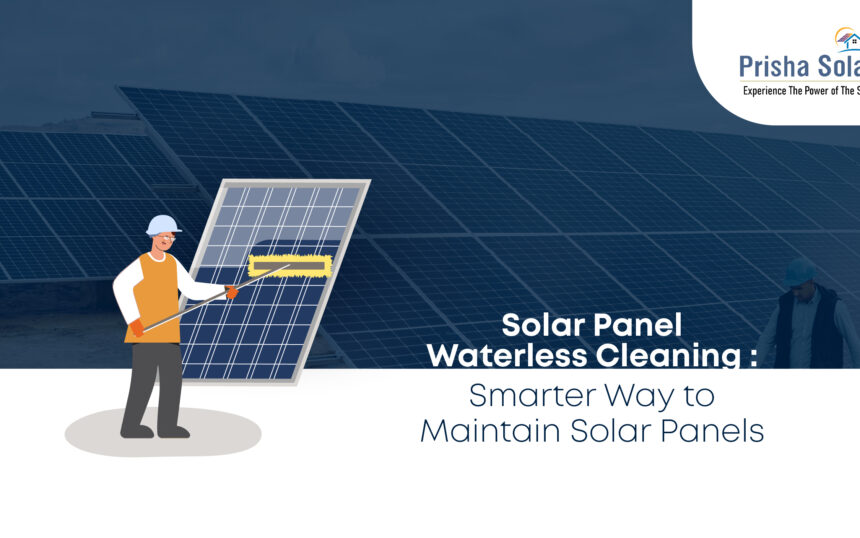
Waterless cleaning is a method of removing dust and light debris from solar panels without using water.
Depending on the size and design of the system, the process may use:
- Soft manual brushes
- Microfiber cleaning equipment
- Air-blowing tools
- Rotating brush systems
- Automated or robotic cleaning devices
The objective is to lift dust from the glass instead of spreading it across the surface.
Quick answer
Waterless solar cleaning is best suited to loose, dry dust. It helps maintain clear panel surfaces while reducing water use and avoiding runoff on the rooftop.
The method is different from wiping panels with an ordinary dry cloth. Dust may contain fine sand or hard particles that can scratch the glass when dragged with force. Proper tools, light pressure, and correct cleaning movement are important.
Why Is Waterless Cleaning Useful for Residential Rooftop Solar Panels?
Many homes are located in areas where solar panels collect dust quickly. This is common near busy roads, construction activity, open plots, and industrial zones.
Using water every time a thin dust layer appears may not be necessary. Waterless cleaning provides a simpler option for regular light maintenance.
Its main benefits include:
| Benefit | Why it matters |
| Lower water use | Useful where water conservation is important |
| Faster light cleaning | Loose dust can be removed without washing and drying |
| Minimal rooftop runoff | Reduces water flowing near walls, drains, or electrical areas |
| Frequent maintenance | Makes regular dust removal more practical |
| Fewer water marks | Avoids mineral spots caused by hard water |
| Suitable for automation | Can be used with certain robotic cleaning systems |
For residential rooftop solar panels, this approach can be especially useful during dry seasons when dust accumulates repeatedly but there is little sticky contamination.
A professional solar company in Ahmedabad can assess whether the system needs routine dry cleaning, occasional water cleaning, or a combination of both.
When Is Waterless Cleaning the Right Choice?
Waterless cleaning is most effective when the dirt is dry and loosely attached to the glass.
It may be suitable when:
- Panels have a light dust layer
- The weather has remained dry
- Cleaning is carried out regularly
- Water supply is limited
- Hard water leaves visible marks
- Rooftop drainage is inconvenient
- The system has many panels
- Cleaning frequency needs to be increased
It is less effective for:
- Bird droppings
- Dried mud
- Sticky pollution
- Oily residue
- Tree sap
- Mineral deposits
- Dirt that has remained for a long period
In these situations, water or another approved cleaning method may be required to soften and remove the deposit safely.
Good solar panel cleaning services should inspect the type of dirt before deciding which method to use. A fixed approach may not provide suitable results for every rooftop.
How Does the Waterless Cleaning Process Work?
The cleaning process should begin with an inspection rather than immediate brushing.
A basic professional process may include:
- Checking the panels for cracks or physical damage
- Inspecting cables, connectors, and frames
- Identifying loose and hardened dirt
- Selecting the correct brush or equipment
- Removing dust using light and controlled movement
- Cleaning panel edges and accessible frame areas
- Checking the surface for remaining marks
- Reviewing generation after cleaning
The cleaner should work in a way that moves dust away from the module instead of repeatedly spreading it across the glass.
The condition of the brush matters as much as its softness. A brush containing trapped sand, stones, or dried dirt may damage the surface. Cleaning equipment should therefore be checked and maintained before use.
Early morning or evening is generally more comfortable and safer for rooftop work. It also reduces exposure to strong heat and intense sunlight.
Can Waterless Cleaning Damage Solar Panels?
Waterless cleaning can be safe when the correct tools and technique are used. However, poor handling may create fine scratches or damage the panel structure.
Common mistakes include:
| Incorrect practice | Possible result |
| Using a hard brush | Scratches on the glass |
| Applying heavy pressure | Stress on the module surface |
| Using dirty equipment | Sand and debris dragged across panels |
| Walking on panels | Cracks or internal cell damage |
| Pulling cables | Loose or damaged electrical connections |
| Cleaning broken modules | Increased electrical and physical risk |
| Working on an unsafe roof | Risk of falls or injuries |
Homeowners should avoid ordinary household brooms, rough cloths, metal tools, and abrasive cleaning pads.
Dry brushing should also not be forced when the dirt is stuck to the glass. Repeated pressure can create damage without properly removing the deposit.
A reliable solar company in Ahmedabad should first determine whether waterless cleaning is appropriate for the panel condition.
How Does Waterless Cleaning Compare With Water Cleaning?
Neither method is better in every situation. They are suited to different types of maintenance.
| Factor | Waterless cleaning | Water cleaning |
| Best for | Loose, dry dust | Sticky and hardened deposits |
| Water requirement | None or minimal | Moderate |
| Risk of hard-water marks | Very low | Possible |
| Cleaning frequency | Suitable for frequent use | Usually used when deeper cleaning is needed |
| Rooftop runoff | Minimal | Requires drainage management |
| Bird droppings | Often insufficient | Usually more effective |
| Main risk | Scratching from trapped particles | Pressure, water quality, and electrical exposure |
For many homes, the smartest approach is a combined maintenance plan.
Waterless cleaning can be used for regular dust removal, while water-based cleaning can be scheduled when stubborn dirt appears. This avoids unnecessary water use without allowing difficult deposits to build up.
Experienced solar panel cleaning services should recommend a method based on the site rather than using the same technique throughout the year.
When Should You Hire Professional Solar Panel Cleaning Services?
Homeowners may be able to handle light cleaning on a flat and safely accessible terrace. However, professional help is advisable when access or panel condition creates risk.
Consider trained support when:
- Panels are installed on a sloping roof
- There is limited walking space
- The installation is elevated
- A large number of panels must be cleaned
- Dirt is uneven or difficult to identify
- Cables or connectors appear damaged
- Output has fallen unexpectedly
- Robotic or specialized equipment is required
- You are unsure which brush is safe
Before hiring a provider, ask:
- What type of cleaning equipment will be used?
- Is the brush designed for solar panels?
- How will trapped dust be removed from the equipment?
- Will the panels be inspected before cleaning?
- Are rooftop safety measures included?
- Will stubborn stains be handled separately?
- Is generation checked before and after cleaning?
Professional solar panel cleaning services should treat cleaning as part of preventive maintenance, not simply as surface dusting.
Conclusion
Solar panel waterless cleaning can be a practical way to maintain residential rooftop solar panels, especially in dry and dusty conditions. It reduces water use, prevents hard-water marks, limits rooftop runoff, and makes frequent light cleaning easier.
However, it is not suitable for every type of dirt. Bird droppings, mud, oily deposits, and hardened stains may still require water-based cleaning.
The safest approach is to inspect the panels first and select the method according to the type of contamination. A knowledgeable solar company in Ahmedabad can help create a maintenance plan that combines waterless and water-based cleaning where necessary.
Regular, careful cleaning helps keep the panel surface clear while protecting the glass, wiring, frames, and long-term performance of the solar system.
Frequently Asked Questions
1. Is waterless cleaning safe for solar panels?
Yes, provided soft, clean, and suitable equipment is used with light pressure. Rough or dirty brushes may scratch the glass.
2. Can waterless cleaning remove bird droppings?
It may remove fresh and light deposits, but hardened bird droppings generally require water or another approved cleaning method.
3. How often should waterless cleaning be done?
Frequency depends on local dust, nearby construction, traffic, weather, and panel angle. Homeowners should rely on visual inspection and generation monitoring rather than a fixed schedule.
4. Is robotic waterless cleaning suitable for homes?
It may be suitable for certain rooftop layouts, especially larger systems. The equipment must be compatible with the panel arrangement and mounting structure.
5. Does waterless cleaning improve solar generation?
It can restore generation lost because of loose surface dust. The actual improvement depends on how heavily the panels were soiled and whether other technical issues are present.