

Dust, bird droppings, leaves, and pollution can gradually reduce the sunlight reaching a solar panel’s surface. Regular cleaning helps maintain the performance of rooftop systems, but homeowners often wonder whether panels should be washed with water or cleaned using a waterless method.
Both methods can work when performed correctly. The better option depends on the type of dirt, water quality, rooftop access, weather, and cleaning equipment. Professional solar panel cleaning services should inspect the system before selecting a method rather than using the same process for every property.
What Is Water-Based Solar Panel Cleaning?
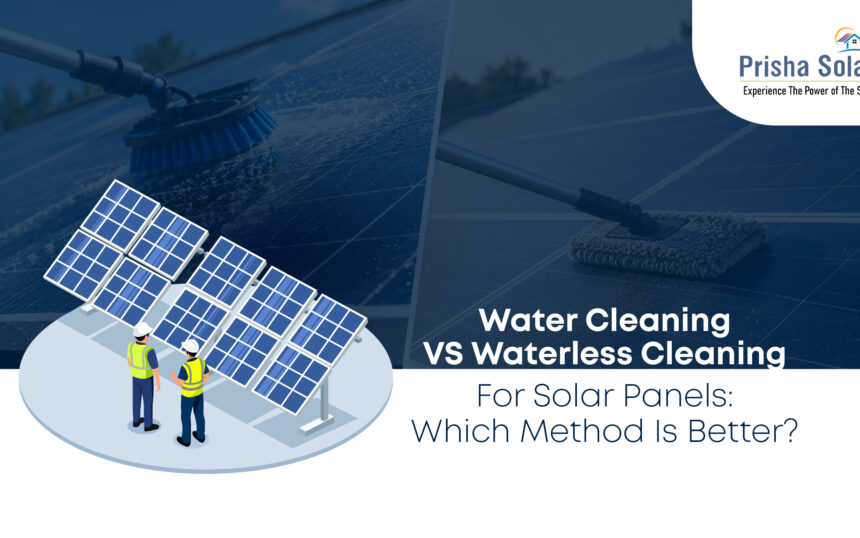
Water cleaning uses clean water along with a soft cloth, sponge, brush, or approved cleaning tool to remove dirt from the panel glass.
It is commonly used when panels have:
- Bird droppings
- Sticky pollution residue
- Mud stains
- Pollen deposits
- Dried rain marks
- Dirt that cannot be removed by brushing alone
Panel manufacturers generally recommend using clean water with a soft sponge or cloth. Rough tools, abrasive powders, strong chemicals, and acidic or alkaline cleaners should be avoided because they may scratch the glass or affect module materials.
How does water cleaning work?
A typical professional process includes:
- Inspecting the panels for cracks or exposed wiring
- Allowing hot panels to cool
- Removing loose dust gently
- Applying suitable water without excessive pressure
- Cleaning the surface with non-abrasive tools
- Checking for remaining marks or residue
Panels should preferably be cleaned during the early morning or evening when sunlight and module temperature are lower. Manufacturer guidance warns against cleaning very hot modules because a large temperature difference between the glass and water can create thermal stress.
What Is Waterless Solar Panel Cleaning?
Waterless cleaning removes loose dust without washing the panels. It may involve soft brushes, microfiber tools, air-based equipment, or specialized robotic systems designed for photovoltaic modules.
This method is most suitable for:
- Light, loose dust
- Frequent maintenance
- Dry conditions
- Areas with limited water availability
- Large panel surfaces requiring routine cleaning
- Locations where water runoff is difficult to manage
Waterless cleaning is not simply wiping panels with any dry cloth. Improper dry cleaning can drag hard dust particles across the glass and create fine scratches.
A trained provider should use equipment designed for solar modules and apply minimal pressure. The panels should also be checked for sand, hardened deposits, or sticky contamination before dry tools are used.
Quick answer
Waterless cleaning is generally better for loose dust. Water cleaning is usually more effective for bird droppings, mud, oily residue, and stubborn stains.
Water Cleaning vs Waterless Cleaning: What Is the Difference?
The two methods differ mainly in cleaning ability, water use, equipment, and suitability for different types of dirt.
| Factor | Water cleaning | Waterless cleaning |
| Best suited for | Sticky or hardened dirt | Loose surface dust |
| Water requirement | Moderate | Little or none |
| Risk of mineral marks | Possible with poor-quality water | Not applicable |
| Cleaning equipment | Water, soft brush or sponge | Soft brush, microfiber or robotic tool |
| Typical frequency | Periodic deep cleaning | More frequent light cleaning |
| Main concern | Thermal shock and water quality | Scratching from trapped particles |
| Rooftop runoff | Must be managed | Minimal |
| Result on bird droppings | Usually more effective | May be insufficient |
Neither method is automatically safer in every situation.
Water cleaning can cause problems if hard water dries on the glass and leaves mineral deposits. Water should also be kept away from damaged cables, exposed electrical parts, and connectors. Manufacturer instructions state that connectors should remain clean and dry during cleaning.
Waterless cleaning can cause damage if rough brushes or dirty cloths are repeatedly dragged across the module surface.
Which Cleaning Method Is Better for Residential Rooftop Solar Panels?
For most residential rooftop solar panels, a combination of both methods is often the most practical approach.
Light dust can be removed using a safe waterless method. Water can then be used occasionally when panels develop stubborn marks or contamination that dry brushing cannot remove.
The decision should consider:
- Type of dirt on the panels
- Amount of dust in the surrounding area
- Local water quality
- Roof slope and accessibility
- Panel manufacturer’s instructions
- Frequency of rainfall
- Nearby construction activity
- Bird activity
- Safety of the cleaning area
Homes near busy roads, construction sites, industrial zones, or dusty open land may require more frequent inspection. Rain can remove some loose dirt, but it may not fully clean bird droppings or sticky deposits. LONGi’s module guidance notes that cleaning frequency depends on how quickly dirt accumulates and that rain may reduce, but not always remove, the need for cleaning.
A reliable solar company in Ahmedabad should avoid recommending a fixed cleaning schedule without first considering the site conditions.
What Mistakes Should Be Avoided During Solar Panel Cleaning?
Incorrect cleaning can create safety risks and may damage the modules.
Avoid the following:
- Cleaning panels during strong midday heat
- Walking or standing on the panels
- Using metal scrapers
- Using hard or abrasive brushes
- Applying strong detergents or chemicals
- Using very high-pressure water directly on modules
- Cleaning cracked panels without professional inspection
- Spraying water on electrical connectors
- Pulling or disturbing cables
- Working on a wet or unsafe rooftop without protection
Panel manufacturers advise against standing on modules, using rough tools, and cleaning panels with broken glass or exposed wiring.
Homeowners should also avoid assuming that more pressure means better cleaning. Excessive force can damage seals, frames, connectors, or the glass surface.
Professional solar panel cleaning services should inspect visible defects before beginning work and follow the module manufacturer’s maintenance instructions.
When Should You Hire Professional Solar Panel Cleaning Services?
Professional support is useful when panels are difficult to reach, heavily soiled, installed on a sloped roof, or surrounded by electrical and structural hazards.
Consider hiring trained cleaners if:
- The rooftop does not have safe walking access
- Panels are installed at a significant height
- Bird droppings have hardened
- Mineral deposits remain after washing
- Generation has fallen without a clear reason
- The system contains damaged cables or panels
- You are unsure which tools are safe
- A large number of panels must be cleaned
A professional provider should explain the proposed method, tools, safety precautions, and water quality before starting.
A dependable solar company in Ahmedabad may also check the inverter monitoring data before and after cleaning. This helps determine whether reduced output is caused by dirt or whether the system needs a technical inspection.
Conclusion
Water cleaning and waterless cleaning are both useful, but they solve different maintenance needs. Waterless cleaning is suitable for frequent removal of loose dust, while water cleaning is more effective for bird droppings, mud, pollution residue, and stubborn deposits.
For most residential rooftop solar panels, the best approach is not choosing one method permanently. It is selecting the safest method based on the type of dirt, panel condition, water quality, and manufacturer guidance.
Qualified solar panel cleaning services can help protect the modules while keeping the surface clear and accessible to sunlight. Homeowners should choose a provider that uses approved tools, avoids harsh chemicals, and understands rooftop electrical safety.
Frequently Asked Questions
1. Can solar panels be cleaned without water?
Yes. Loose dust can be removed using suitable soft brushes, microfiber equipment, or approved automated systems. Waterless cleaning may not remove sticky or hardened contamination.
2. Is tap water safe for cleaning solar panels?
It may be suitable where the water quality is acceptable. Hard water can leave mineral deposits after drying, so purified or low-mineral water may be preferable in some locations.
3. How often should residential solar panels be cleaned?
There is no universal schedule. Cleaning frequency depends on dust levels, rainfall, bird activity, nearby construction, roof angle, and visible dirt accumulation.
4. Can detergent be used on solar panels?
Plain clean water is usually preferred. Detergents should only be used if permitted by the module manufacturer and should be non-abrasive and thoroughly rinsed.
5. Does cleaning solar panels increase electricity generation?
Cleaning can restore output lost because of surface dirt. The improvement depends on how heavily the modules were soiled and whether other technical issues are affecting the system.