

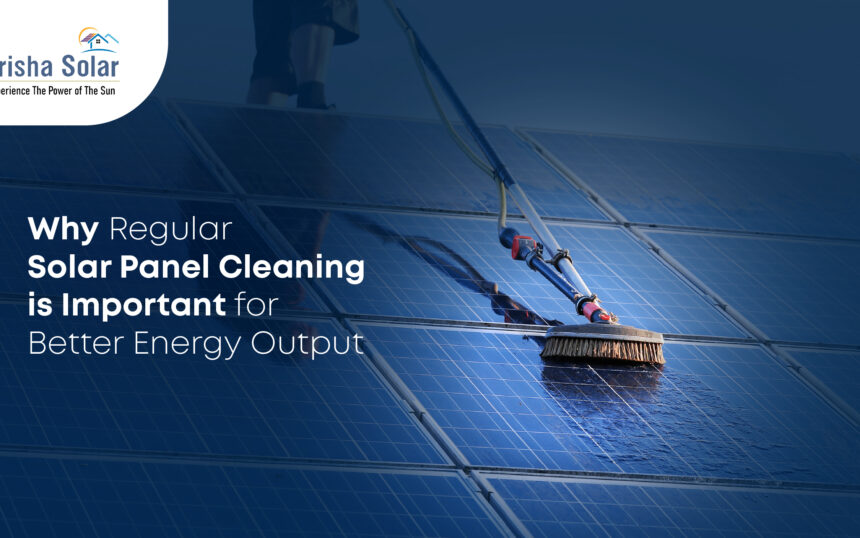
Solar panels generate electricity by absorbing sunlight through their glass surface. When dust, pollution, bird droppings, leaves, or other deposits cover that surface, less sunlight reaches the solar cells. As a result, the system may generate less electricity than expected.
Regular solar panel cleaning services help keep the modules clear without damaging their glass, frames, wiring, or connectors. Cleaning is especially relevant for homes near busy roads, construction zones, industrial areas, open land, or locations with frequent bird activity.
For homeowners, the goal is not to keep panels looking spotless every day. It is to prevent dirt from building up to a level that affects energy output or creates maintenance concerns.
How Does Dirt Reduce Solar Panel Energy Output?
Solar panels need direct access to sunlight to generate electricity. Dirt forms a layer between the sun and the solar cells, reducing the amount and uniformity of light reaching the module.
Common sources of soiling include:
- Road dust
- Construction debris
- Bird droppings
- Dry leaves
- Pollen
- Industrial pollution
- Mud left after light rain
- Mineral marks from hard water
A thin, even layer of dust may cause a gradual reduction in output. Heavier or uneven deposits can block specific parts of a module and affect performance more noticeably.
Solar’s operation and maintenance guidance states that dust, bird droppings, ice, and other obstructions can reduce module output. It also notes that partial obstruction may contribute to localized hot spots, which is why module surfaces should be inspected and cleaned regularly.
Quick answer
Dirty solar panels receive less usable sunlight, which can reduce electricity generation. Regular cleaning removes the obstruction and helps the system operate closer to its expected output.
Why Is Regular Cleaning Important for Residential Rooftop Solar Panels?
Most residential rooftop solar panels are installed in open areas where they are continuously exposed to the environment. Unlike indoor electrical equipment, solar modules collect dust and debris every day.
Regular cleaning supports the system in several ways:
| Benefit | Why it matters |
| Better sunlight exposure | A clean glass surface allows more light to reach the cells |
| More consistent generation | Prevents gradual output loss caused by dirt buildup |
| Easier performance tracking | Makes it easier to identify whether low generation is technical |
| Early issue detection | Cleaning visits may reveal cracks, loose cables, or damaged parts |
| Improved maintenance access | Keeps pathways and module edges visible |
| Reduced stubborn deposits | Prevents bird droppings and mud from hardening over time |
Cleaning also helps homeowners evaluate system performance more accurately. If output remains low after the panels have been cleaned, the issue may involve shading, inverter performance, wiring, equipment faults, or changing weather rather than surface dirt.
A dependable solar company in Ahmedabad may review generation data before recommending cleaning or technical inspection.
How Often Should Solar Panels Be Cleaned?
There is no single cleaning schedule that applies to every rooftop.
Cleaning frequency depends on:
- Local dust levels
- Seasonal weather
- Rainfall
- Roof angle
- Nearby trees
- Bird activity
- Construction in the surrounding area
- Traffic and pollution
- Type of dirt
- Accessibility of the installation
A home near a construction site may require more frequent attention than a home in a cleaner residential area. Similarly, panels installed at a lower angle may retain more dust than panels that allow rainwater to run off easily.
Rain can wash away some loose dust, but it may not remove bird droppings, sticky pollution, mud, or residue along the lower edge of the panel. Manufacturer guidance notes that cleaning frequency should be based on how quickly dirt accumulates rather than following one fixed timetable.
Homeowners can use a simple inspection routine:
- Check the panels visually every few weeks
- Review generation data regularly
- Inspect after dusty weather or nearby construction
- Look for bird droppings and leaf buildup
- Arrange cleaning when dirt is clearly visible or output changes unexpectedly
Professional solar panel cleaning services can help determine a practical schedule based on the actual site.
What Is the Right Way to Clean Solar Panels?
Solar panels must be cleaned gently. Their top glass is durable, but rough tools, excessive pressure, and unsuitable chemicals can damage the surface or surrounding components.
A safe cleaning process generally includes:
- Inspecting the modules and cables before cleaning
- Choosing a cooler time of day
- Removing loose dust carefully
- Using clean water where necessary
- Cleaning with a soft sponge, cloth, or approved brush
- Keeping electrical connectors dry
- Checking the panels after cleaning
Early morning or evening is usually more suitable because the modules are cooler and solar irradiance is lower. Cleaning very hot panels with cold water may create unnecessary thermal stress. Manufacturer manuals also recommend avoiding cleaning when module temperatures are high.
The following should be avoided:
- Metal scrapers
- Hard brushes
- Abrasive powders
- Harsh acidic or alkaline cleaners
- High-pressure water directed at seals or connectors
- Standing or walking on panels
- Pulling cables
- Cleaning cracked panels without inspection
Trina Solar warns users not to stand or walk on modules and not to scratch the front or rear surfaces. It also advises keeping electrical components and connectors clean and dry.
Can Improper Cleaning Damage a Solar System?
Yes. Cleaning can cause damage when unsuitable tools, chemicals, water pressure, or working methods are used.
Potential risks include:
| Incorrect practice | Possible result |
| Hard brush or scraper | Scratches on the glass surface |
| Walking on modules | Cracks or internal cell damage |
| Cleaning hot panels | Thermal stress |
| Strong chemical cleaner | Damage to coatings or module materials |
| High-pressure water | Stress on seals, frames, and connections |
| Wet electrical connectors | Corrosion or electrical issues |
| Unsafe rooftop movement | Risk of falls and personal injury |
Homeowners should not attempt cleaning when the panels are difficult to reach or when the rooftop is wet, steep, or unsafe.
Visible cracks, exposed wiring, loose connectors, or damaged frames should be assessed before water is used. Manufacturer guidance recommends avoiding cleaning modules with broken glass or exposed electrical parts unless handled by trained personnel with appropriate safety precautions.
A professional solar company in Ahmedabad should consider both module care and rooftop safety when planning maintenance.
When Should You Hire Solar Panel Cleaning Services?
Professional assistance is useful when cleaning involves height, electrical risk, difficult access, or heavy contamination.
Consider hiring trained cleaners when:
- Panels are installed on a sloped roof
- Safe walking space is limited
- The system is installed at a significant height
- Bird droppings have hardened
- Mineral marks remain after basic cleaning
- There are many modules to clean
- Cables or connectors appear damaged
- Generation has declined without a clear cause
- The manufacturer recommends specialized cleaning
- You are unsure which tools are safe
Qualified solar panel cleaning services should explain:
- Which cleaning method will be used
- Whether water is required
- What tools will touch the module surface
- How electrical components will be protected
- What rooftop safety measures will be followed
- Whether a visual system inspection is included
For residential rooftop solar panels, professional maintenance can also help identify loose wiring, shading changes, damaged glass, corrosion, or structural concerns that may otherwise go unnoticed.
Conclusion
Regular solar panel cleaning is important because dust, bird droppings, pollution, and other deposits can block sunlight and reduce energy output. Cleaning also makes it easier to monitor system performance and identify technical problems that are not caused by dirt.
The correct frequency depends on the location, weather, roof design, and speed of dirt accumulation. Homeowners should inspect their residential rooftop solar panels regularly rather than relying on a fixed schedule.
Professional solar panel cleaning services can provide a safer and more consistent solution, especially where access is difficult or the modules require deeper cleaning. A trusted solar provider should use non-abrasive tools, follow manufacturer guidance, protect electrical components, and avoid unnecessary pressure or harsh chemicals.
Frequently Asked Questions
1. Does cleaning solar panels improve electricity generation?
Cleaning can restore generation that was reduced by dust or other surface deposits. The improvement depends on how dirty the panels were and whether other technical or weather-related factors are affecting performance.
2. Can rain clean rooftop solar panels completely?
Rain may remove some loose dust, but it often does not remove bird droppings, sticky pollution, mud, or mineral residue. Visual inspection is still recommended after rainfall.
3. How can I tell whether my solar panels need cleaning?
Check for visible dirt and compare current generation with normal output under similar weather conditions. A gradual decline or uneven soiling may indicate that cleaning is needed.
4. Is it safe to clean solar panels with tap water?
Tap water may be suitable if its quality is acceptable. Hard water can leave mineral deposits, so low-mineral or purified water may be preferable where water hardness is high.
5. Can I clean solar panels myself?
Basic cleaning may be possible on a flat, safely accessible roof. Professional support is safer for elevated, sloped, wet, damaged, or difficult-to-reach installations.